What is Piecing in Quilting? (Patchwork for Beginners)
What Is Piecing in Quilting? A Beginner-Friendly Explanation
If you've ever picked up a quilting pattern and found yourself puzzling over the word 'piecing,' you are in very good company. Quilting has its own little language, and it can feel like everyone else already knows the secret code! But I promise – once it clicks, it really clicks.
So let's talk about piecing: what it is, how it works, and why it's actually the most exciting part of starting a quilt.
If you'd like to watch the full video over on YouTube, click the image below.
So, What Is Piecing In Patchwork?
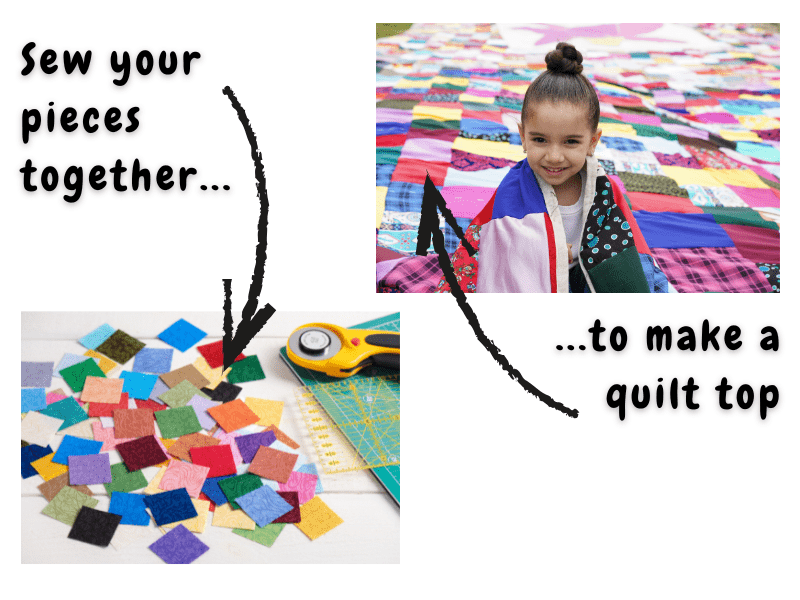
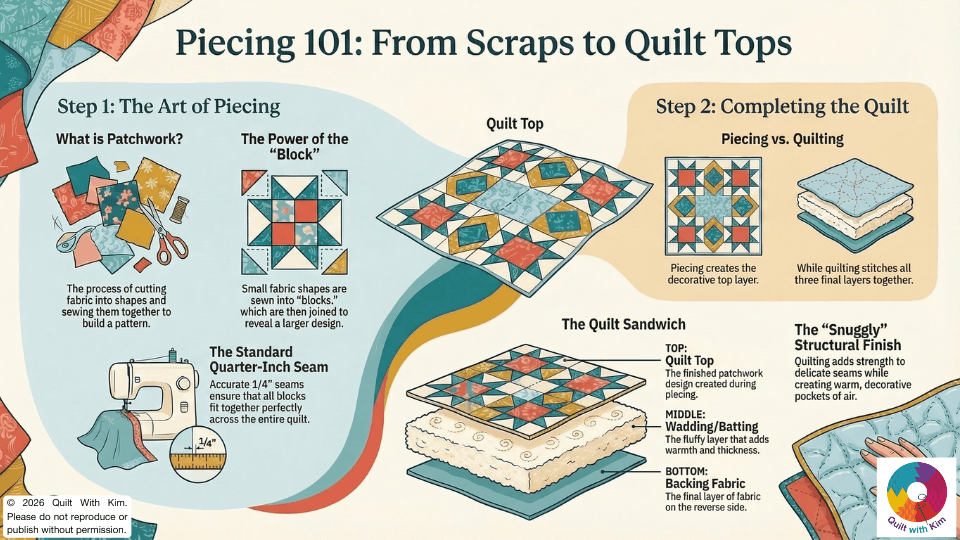
Piecing – sometimes called patchwork – is simply the process of cutting your fabric into shapes and sewing them back together to create a pattern.
Yes, we cut the fabric up and then sew it back together again! My husband has never quite understood why we do that – but we quilters get it completely. There is something so satisfying about watching those little pieces come together into something beautiful. 😄
The act of sewing those pieces together is called piecing. And the finished design you create is known as your quilt top.
What Does a Pieced Block Look Like?
When you piece fabric together, you create what's called a block. Think of a simple nine-patch – nine squares of fabric sewn into a three-by-three grid. That's a pieced block!
On their own, tiny pieces of fabric might not look like much. But join enough blocks together, and something magical happens. A pattern emerges. That's the joy of piecing, and it never gets old.
My beginner students always start with a nine-patch cushion for exactly this reason. It's small, manageable, and gives you that wonderful feeling of a design coming together – stitch by stitch.
Piecing vs. Quilting: What's the Difference?
Here's where a little confusion tends to creep in – and completely understandably so!
The whole hobby is called quilting. But 'quilting' also refers to a very specific step that happens after piecing. Let me explain both.
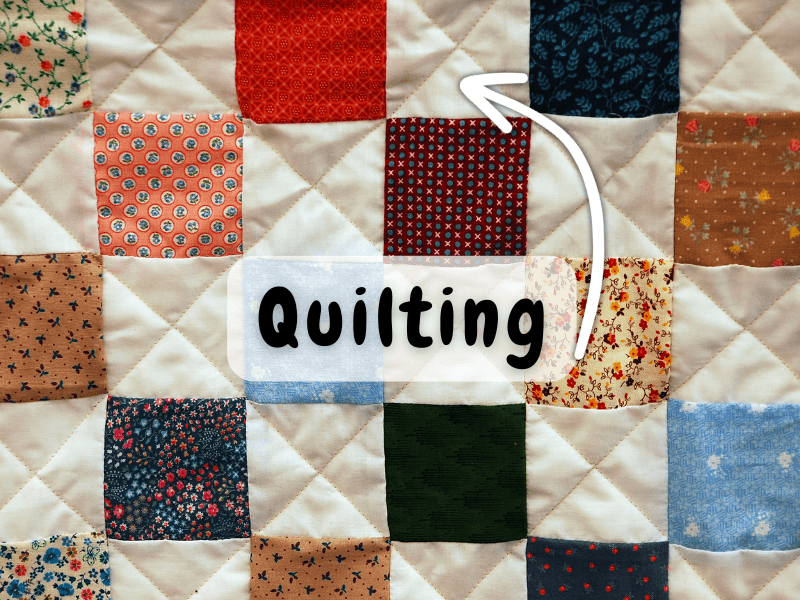
Piecing creates your quilt top – that's the pretty patterned layer on the front. Once your top is finished, quilting is the process of stitching together all three layers:
• Your quilt top (the patchwork you've pieced)
• Your wadding or batting (the fluffy middle layer that adds warmth)
• Your backing fabric (the layer on the back)
Those stitches hold everything together, add decoration, and create those gorgeous little pockets of air that make a quilt so snuggly and warm. My mum always called it 'snuggly buggly' – and I think that's absolutely the right word for it! 🥰
Why Do We Need to Piece First?
Piecing comes first because it builds the visual design of your quilt. It's your creative stage – choosing fabrics, arranging colours, and watching a pattern grow.
The pieced quilt top on its own is beautiful, but it's not quite strong enough to withstand everyday life. Those tiny quarter-inch seams need the support of all three layers stitched together. That's what quilting does.
But piecing? That's where the fun begins.
What Counts as a Quarter-Inch Seam?
You'll hear the phrase 'quarter-inch seam allowance' a lot in quilting. This is the small strip of fabric between your stitch line and the raw edge – and in quilting, the standard is always a quarter of an inch.
It sounds tiny, and it is! But being accurate with your seam allowance makes a big difference to how neatly your blocks fit together. All quilt patterns worldwide are designed around that unassuming little quarter inch.
Don't worry if it takes a bit of practice to get consistent – it absolutely does for everyone when they start out.
A Quick Recap On the Difference Between Piecing And Quilting
• Piecing = cutting fabric into shapes and sewing them together to build a pattern.
• The result is called your quilt top.
• Piecing is also known as patchwork.
• It's the first (and most creative!) step of making a quilt.
• Quilting comes after – that's when all three layers are stitched together.
• The result is called your quilt top.
• Piecing is also known as patchwork.
• It's the first (and most creative!) step of making a quilt.
• Quilting comes after – that's when all three layers are stitched together.
See? Nothing scary there at all. Piecing is really just fancy quilting language for: cut, sew, and create something lovely. And once you've tried it, you'll be completely hooked.
Ready to Give Piecing a Go And Make Your First Patchwork Block?
The best way to understand piecing is to try it! And I'd love to help you get started. Whether you're curious about beginner projects, want to understand more quilting terms, or just need a friendly guide to hold your hand through those first steps – I've got you.
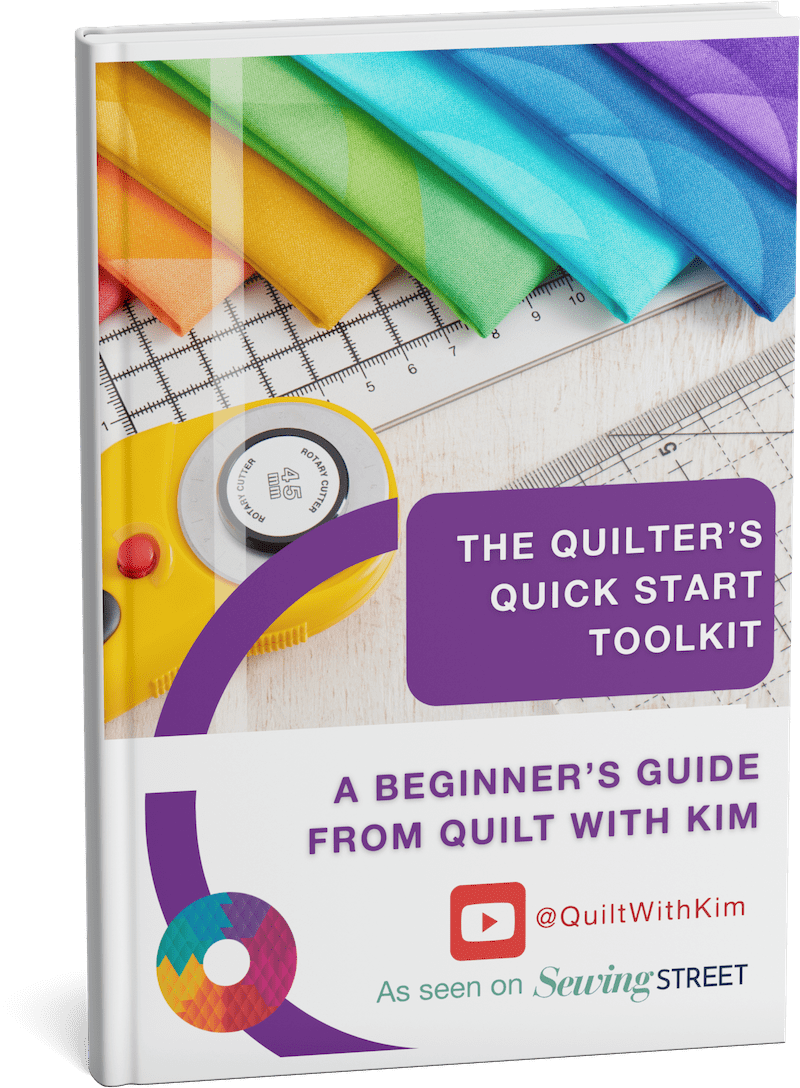
🎁 New to Quilting? Start Here!
Download my FREE Beginner Quilter's Quick Start Toolkit! Inside you'll find a plain-English guide to quilting jargon, a list of exactly what tools you need (and what you don't!), beginner-friendly project ideas, and a fun 5-day email challenge to get you started – with zero overwhelm and zero confusion.
I do hope that has helped.
See you next time,
Kim
xx
Kim
xx

Kim Reynolds
03/16/2026 14:00:00 +0000
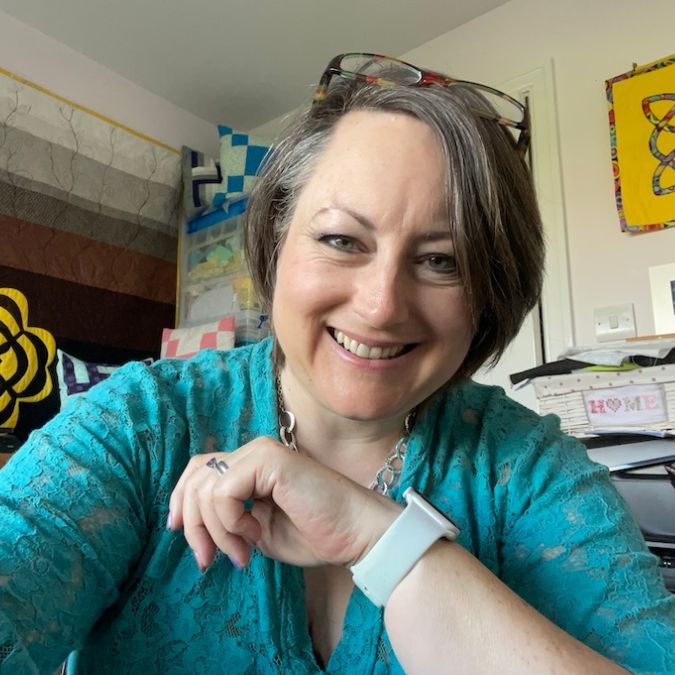
Kim Reynolds - Founder of Quilt With Kim
Kim is the founder of Quilt With Kim, a trusted resource for quilting beginners. With over seven years of experience inspiring students to explore their creativity, Kim specialises in teaching patchwork and quilting through easy-to-follow courses and tutorials.
She holds a City & Guilds qualification in Patchwork & Quilting and loves helping beginners create their first quilts with confidence.
Kim also hosts a popular YouTube channel, Quilt With Kim, where she shares tutorials and tips tailored to beginners. She has also taught patchwork live on air on Sewing Street on TV.
Based in Gloucestershire, UK, Kim enjoys yoga, cooking, and seaside and country walks with her husband, Nige. Her chief quilting assistant, Shadow the cat, is always on hand to supervise her projects.
Download the FREE Beginner Quilter's Toolkit - a free guide to help you to know how to get started with quilting and to join Kim's newsletter list and begin your quilting journey today.
Confused About What Equipment You Need To Get Started With Patchwork & Quilting?
Discover the 14 essential tools and equipment you need as beginner in patchwork and quilting.
Download your FREE copy today.
PLUS comes with handy print out shopping guide!
Get In Touch
Dedicated email coming soon
2023 - 2024 The Patchwork Shop Ltd | All Rights Reserved.
The Patchwork Shop Ltd T/A Quilt With Kim | Registered in England | Company Number 10630597