Cotton vs Polyester Thread for Quilting: A Beginner’s Guide
Cotton or Polyester Thread for Quilting? Here's What You Need to Know
Standing in the haberdashery trying to choose the right thread? It can feel surprisingly overwhelming when you're starting out. Cotton? Polyester? Does it even matter?
The short answer: yes, it does matter – and you need to use the right thread in the right places. However, once you understand the simple rule, you'll never second-guess your thread choice again.
Let me walk you through it.
The video below covers this subject, despite the title!
First, a Quick Bit of Context
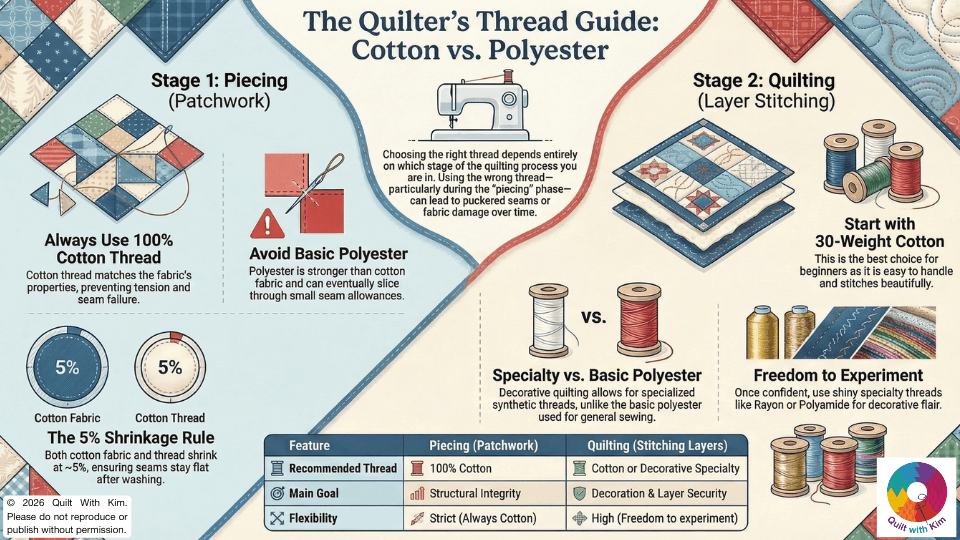
In quilting, there are two distinct stages that use thread in slightly different ways: piecing (sewing your fabric pieces together to make your quilt top) and quilting (stitching through all three layers to hold everything together).
The thread rules are different for each stage – so let's look at them separately.
For Piecing: Always Use Cotton Thread
When you're piecing – that is, sewing your fabric shapes together – cotton thread is the one to reach for every time.
Here's the reason. Quilting fabrics are cotton, and we work with tiny quarter-inch seam allowances. Polyester thread is actually stronger than cotton fabric. That sounds like a good thing, but it isn't in this case!
Over time, a polyester thread can pull and drag against the cotton fibres in your fabric. With such a small seam allowance, that tension causes seams to weaken and eventually split. If you've ever seen photos in quilting groups of baffled quilters asking 'why has my seam come apart?!' – this is very often the reason.
The Shrinkage Factor
There's another reason to stick with cotton thread for piecing: shrinkage.
Natural cotton fabric has a shrinkage rate of around 5%. A good quality quilting cotton from a trusted brand will be well within that range.
Cotton thread shrinks at a very similar rate – so when your finished project goes through the wash, the fabric and thread shrink together, and everything stays looking lovely.
Polyester thread shrinks far less than cotton. So, if you use polyester thread with cotton fabric, the fabric shrinks but the thread holds firm – and that's where you can get pulling, puckering, and broken seams over time.
💡 One little bonus tip: try to use good quality cotton fabric too. Cheap fabric can shrink dramatically – I once held a steam iron over a piece of budget cotton, and it visibly shrank before my eyes! A decent quilting cotton from a reputable brand won't let you down like that.
For Quilting: You Have More Freedom!
Here's where things get a little more exciting.
When it comes to the quilting itself – stitching through all three layers to hold your quilt together – you have a wider choice of threads.
A cotton quilting thread is a brilliant starting point for beginners. A 30-weight cotton thread (Gutermann make a lovely one, as do many other thread brands) is easy to handle, stitches beautifully, and shows up well on the surface of your quilt.
A cotton quilting thread is a brilliant starting point for beginners. A 30-weight cotton thread (Gutermann make a lovely one, as do many other thread brands) is easy to handle, stitches beautifully, and shows up well on the surface of your quilt.
But once you're feeling a little more confident, you might want to explore those gorgeous shiny, glittery threads you've spotted in the shops – rayon or polyamide threads that come in stunning colours and add a real sparkle to your quilting.These are absolutely fine to use for quilting!
Because the quilting stitch is doing a different job – holding layers together and adding decoration rather than keeping tiny fabric pieces joined – the rules are more relaxed. So go ahead and add a bit of glitz if you fancy it. ✨
What About Polyester Thread for Quilting?
A question that comes up often: can you use regular polyester thread for quilting (the layer-stitching part)?
In short – yes, many quilters do. Specialist quilting threads made from rayon, polyamide, or similar fibres are designed for decorative quilting, and they're widely used and loved. The key difference is that these are specialist threads made for the purpose, rather than basic sewing polyester.
For your very first projects, keep it simple and start with a good cotton quilting thread. Once you're comfortable, you can experiment as much as you like.
A Simple Rule to Remember
• Piecing (patchwork): always use cotton thread – it matches your fabric and won't damage your seams.
• Quilting (stitching through all three layers): start with cotton, then experiment with shiny specialist threads once you're confident.
• Avoid basic polyester for piecing – it's stronger than your fabric and can cause seams to split over time.
• Invest in good quality cotton fabric – it behaves far better than budget alternatives and is worth every penny.
• Quilting (stitching through all three layers): start with cotton, then experiment with shiny specialist threads once you're confident.
• Avoid basic polyester for piecing – it's stronger than your fabric and can cause seams to split over time.
• Invest in good quality cotton fabric – it behaves far better than budget alternatives and is worth every penny.
That's genuinely all there is to it! The thread stands might look daunting, but with this simple guide, you'll know exactly what to pick up – and why.
🎁 New to Quilting? Start Here!
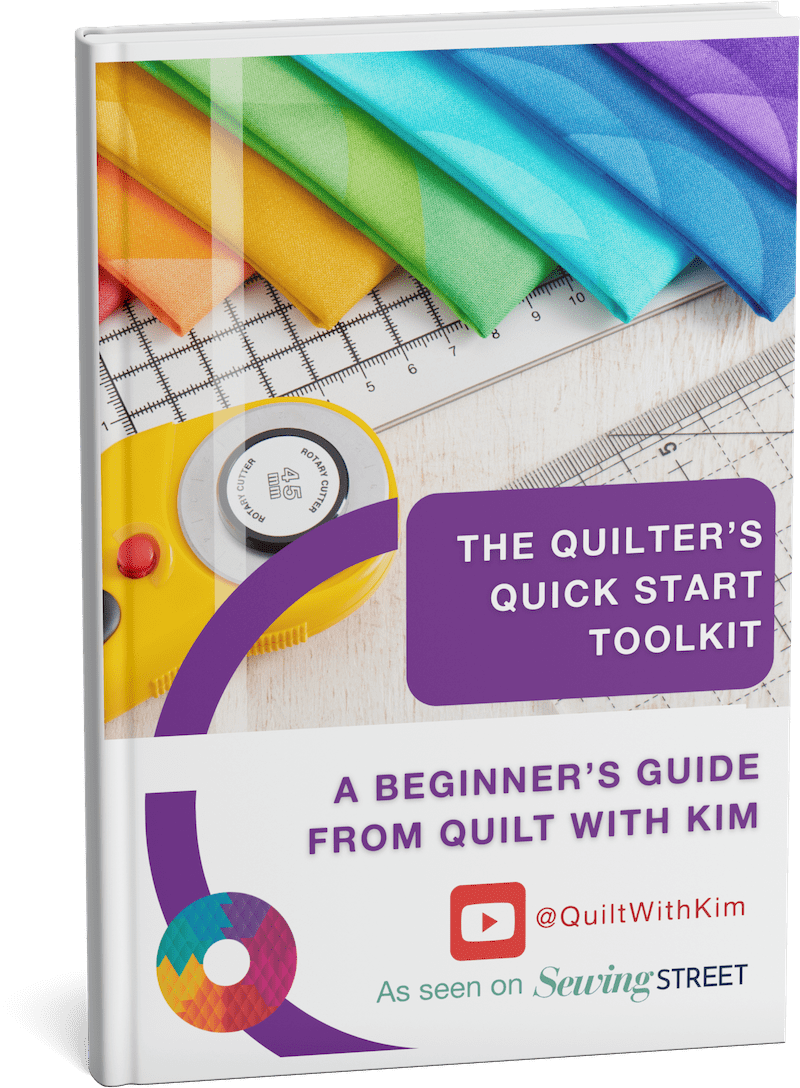
Download my FREE Beginner Quilter's Quick Start Toolkit! Inside you'll find a plain-English guide to quilting jargon, a list of exactly what tools you need (and what you don't!), beginner-friendly project ideas, and a fun 5-day email challenge to get you started – with zero overwhelm and zero confusion.
I do hope that has helped.
Happy quilting – and see you next time!
Kim xx
Kim xx

Kim Reynolds
03/23/2026 15:30:00 +0000
Kim Reynolds - Founder of Quilt With Kim
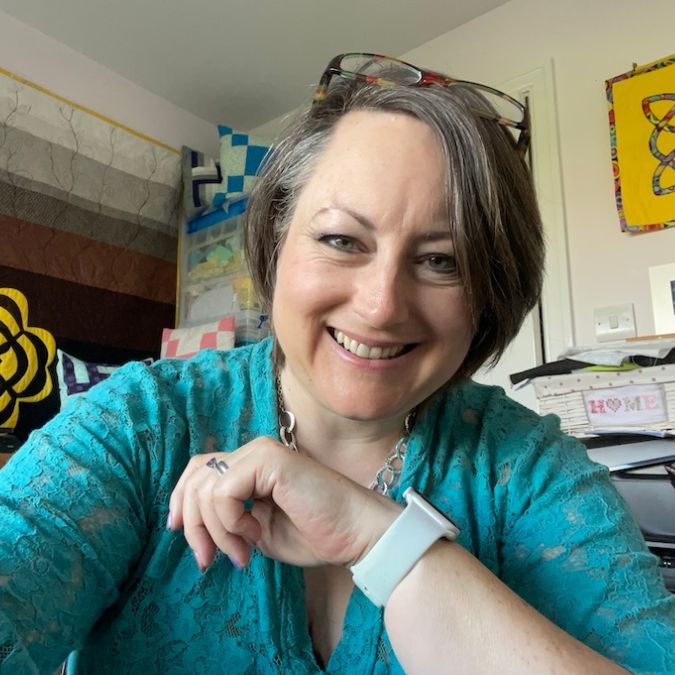
Kim is the founder of Quilt With Kim, a trusted resource for quilting beginners. With over seven years of experience inspiring students to explore their creativity, Kim specialises in teaching patchwork and quilting through easy-to-follow courses and tutorials.
She holds a City & Guilds qualification in Patchwork & Quilting and loves helping beginners create their first quilts with confidence.
Kim also hosts a popular YouTube channel, Quilt With Kim, where she shares tutorials and tips tailored to beginners. She has also taught patchwork live on air on Sewing Street on TV.
Based in Gloucestershire, UK, Kim enjoys yoga, cooking, and seaside and country walks with her husband, Nige. Her chief quilting assistant, Shadow the cat, is always on hand to supervise her projects.
Download the FREE Beginner Quilter's Toolkit - a free guide to help you to know how to get started with quilting and to join Kim's newsletter list and begin your quilting journey today.
Confused About What Equipment You Need To Get Started With Patchwork & Quilting?
Discover the 14 essential tools and equipment you need as beginner in patchwork and quilting.
Download your FREE copy today.
PLUS comes with handy print out shopping guide!
Get In Touch
Dedicated email coming soon
2023 - 2024 The Patchwork Shop Ltd | All Rights Reserved.
The Patchwork Shop Ltd T/A Quilt With Kim | Registered in England | Company Number 10630597